Wednesday, July 09, 2008

Daumal & Soyinka


I tend to tag-team read, that is, I read about 3-4 books at a time. This past week, every morning on the train, I've cracked open the Rene Daumal book, Le Contre-Ciel (The Counter-Heaven) that Simone bought me for my birthday. Daumal is a self-destructive 22-year old at this point, one who is raging with life questions, specifically how to bring about the realization of the inner-self. Daumal found the teachings of Gurdjieff and with them, took on his approach: to bring out the true inner-self, man must rise up against himself and eliminate any aspect of his extrinsic reality which is not fundamental to what he is. His method was described as "metaphysical suicide".

According to this philosophy, "man must separate himself from those limits by systematically negating the reality of the mind-body complex."

I'll let you know how my voluntary destruction to get my essence is coming along after I read some of the poetry.


In the meantime, I also have been reading A Shuttle in the Crypt by Nobel Prize winner Wole Soyinka, Nigerian poet, playwright and novelist.

The first line of the introduction: "The shuttle is a unique species of the caged animal, a restless bolt of energy, a trapped weaver-bird yet charged in repose with unspoken forms and designs. In motion or at rest it is a secretive seed, shrine, kernel, phallus and well of creative mysteries."

Somehow I felt my inner weaver-bird stir as I began to draw an atom-like structure/diagram in my notebook of all the men who have hurt me in my life.

Poems that will flow from Daumal and Soyinka to come.

Friday, June 20, 2008

The Residents


I was first exposed to The Residents in a dark room at 2 a.m. in Columbus, OH. Their music struck me enough to pursue musical research for about a week. Concept bands always fascinate me, so I must put these eyeball men down on the list of things to revisit.

Tuesday, June 17, 2008

Alcohol-Laden Products That Burned My Face and Naughty Bits

I remember using this product while singing its theme to myself in the mirror.


I couldn't find the one from the 1980's that repeated "Jaen Nate, Jean Nate"...this one is enough to make the 'ole bits remember all too well. YEOWSA.

Tuesday, June 03, 2008

Lithuanian Philosopher Levinas

"At the core of Levinas's mature thought (i.e., works of 1961 and 1974) are descriptions of the encounter with another person. That encounter evinces a particular feature: the other impacts me unlike any worldly object or force. I can constitute the other person cognitively, on the basis of vision, as an alter ego. I can see that another human being is “like me,” acts like me, appears to be the master of her conscious life. That was Edmund Husserl's basic phenomenological approach to constituting other people within a shared social universe. But Husserl's constitution lacks, Levinas argues, the core element of intersubjective life: the other person addresses me, calls to me. He does not even have to utter words in order for me to feel the summons implicit in his approach. It is this encounter that Levinas describes and approaches from multiple perspectives (e.g., internal and external). He will present it as fully as it is possible to introduce an affective event into everyday language without turning it into an intellectual theme. Beyond any other philosophical concerns, the fundamental intuition of Levinas's philosophy is the non-reciprocal relation of responsibility. In the mature thought this responsibility is transcendence par excellence and has a temporal dimension specific to it as human experience."

Friday, May 30, 2008

Lapis Lazuli Dream and Yeats

About a year ago, I had a dream about a stolen lapis lazuli necklace in my pocket. Soon after that dream, I stumbled across Yeats' poem, "Lapis Lazuli". Reading it again led to some online research of analyses of this poem, and I found Dr. Linda Sue Grimes' interesting summary.

Through this lens, I am now finding some fundamental issues with the poem. If indeed we look upon tragedy detached, how do we experience joy or know it? Is joy, then, not experiencing it? Not very Buddhist, at least in relation to the idea of moving toward suffering, if that is what we do to attain enlightenment. We must know pain and move through it. It's the foundation of life, yes?

Thursday, May 15, 2008

"Last Year at Marienbad"


1961
Alain Resnais

Played at The Music Box.

I have to remark that Italian Neorealism, from which Resnais and other French New Wave directors derive some cinematic style, was immediately apparent to me via the elaborate setting of the French hotel/chateau. Another character in of itself, the chateau was unfurled in all of of its stoic excess; each sequence positioning it as if it were another longing lover in this pseudo-surreal triangle of desire and deception. Enhanced by the director's dedication to capturing the lonely and sterile splendour of the chateau, one is reminded of Fellini's hotel/sanatorium in 8-1/2.

Sequence by sequence, the "stilling" of stifled aristocratic love and trite conversations framed by careful attention to architectural detail, hypnotic narrative/repetition, and frozen socialites made this film interesting at best to watch.

The lovers in the film flit between the majestic scenery of opulent gardens and classical sculpture, diving dream-like in and out of the same conversation: "Were we really together last year, at this hotel, same time? Were we lovers then? Would I wait for you? Would you run away with me? Don't you remember me? Please, leave me alone."

French film foreplay, and some visuals that occasionally stunned for art's sake, yet we leave the film house unsatisfied, most likely like our lovers.


Up: Lurch-esque husband and his card tricks; waiter who expertly/gingerly picks up a broken cocktail glass off of the immaculate floor in art-house fashion.

Down: The hideous bush-league "Hawkman" dressing gown our heroine wears for a night of sweet love down by the fire.

Saturday, May 10, 2008

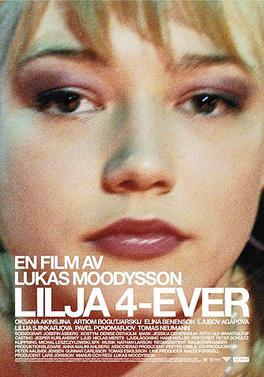
"Lilya 4-Ever"


Directed by Swede Lukas Moodysson, Lilya 4-Ever is a wrenching story of a girl who is sold into sex slavery.

In a post-Soviet Estonian slum, sixteen year old Lilya (Oksana Akinshina) is elated when she finds out her mother's new online boyfriend is taking both of them to the States. The day before the trip, Lilya finds out from her mother that she is not invited after all, and that she will be left alone with her battle-axe aunt Anna. Though her mother promises she will send for her, we know this is just the beginning for Lilya bleak existence. "Aunt Anna" steals her mother's flat away from Lilya and forced her to stay in disgusting closet where an old man had just died a week before. With no money, no food, and dwindling hope that her mother will ever send for her, she fends off apartment quad boys sniffing glue in her apartment and making advances, a battle-ax landlady who steals her mail and shuts off her electricity, and a mischievious little boy Volodya (Artyom Bogucharsky). Her friend persuades her to go to the city to prostitute herself, but Lilya does not participate. After she and Volodya become fast friends looking out for one another and helping each other within the apartment quad, Anna shuts Lilya out for good, her friends turn on her, and she is desperate, hungry, and cold. She is then forced to prostitute herself to survive. She is raped in her own apartment. She meets a young man, Andrei (Pavel Ponomaryov), who makes promises to about a better life in Sweden, but when she arrives, she is sold into sex slavery and kills herself.


Do something: http://www.globalfundforwomen.org/cms/hot-topics/trafficking/trafficking---grants--resources.html

Sunday, April 27, 2008

Trying to Find Helga Stromberg's Poetry

Helga Strömberg's Life (North Park University summary):

Helga Stromberg (nee Henning) was born March 14, 1886 in Gothenberg, Sweden. After graduating from secondary school in 1904, Helga attended a teachers college in Stockholm for a year. She then attended a nurses training school in Hamburg, Germany and in 1913 joined a Swedish Red Cross ambulance team serving in Serbia, where she was decorated. In 1914 she married a student of astronomy, Gustav B. Stromberg (MSS 22) in Paris, France.

In 1916 Gustav received a stipend from the Mt. Wilson observatory, and the two moved to Pasadena, California where they lived the rest of their lives. Helga started writing poetry in Pasadena under the nom de plum of Sister (or Syster) Benediction. She was published quite frequently in the Swedish-American press and the Pasadena Star. She also had six poem collection published, three in English and three in Swedish. She became an honorary member of the Eugene Field Society in 1940.

Helga's husband Gustav died in 1962, and Helga continued to live in the same house, 1383 North Marengo, until her death on July 7, 1971 at the age of 85.

Eddie Rabbitt's Cranium (I Love A Rainy Night II)

A collaboration by Larry Sawyer, Sara Farr, Lina ramona Vitkauskas, and Shawn Baker.


There isn't any kitchen in your dream
about the rusting eagle. Our mushroom Instamatic
moment browns the aperture. The mall trumpet
screeches into the plot with dialogue like:
"Por favor, my city slipped on a decent boa
of invisible psalms." Giant fantastic radio water,
unfortunate clocks, today's sloppy meat sprockets,
I say to you: NOUVEAU RICHE SUCKS.
Lightening tunnels to latex nuns and pumps.
Listen closely to the troupe playing
"Verily, Verily Asparagus." Uniform lips unclassed
by winnowing studies, lips reflecting fish inside
us all. Flagrant pooches drop like molten cereals;
and for only .99 cents, you are the happiest cactus
in the pool. Justify your jack-off petals with falling
sticks, your battery acid in rapture, your bottles pointed
toward your head with swarthy foam. All of a sudden,
I have to go to the bathroom because my hand is too cold.
Chicken.

"Lay down your head to be born"

We wrote these on Chinese New Year. I used fortune cookie slips from our meal to title each poem.

A collaboration with Gene Tanta, Mirela Ciupag, Larry Sawyer, and Lina ramona Vitkauskas.


That special someone loves to see the light in in your eyes.


Trees idealize this volatile bliss; in
the stink of farm and old peaches,
it is time to collect all the stray dogs,
these misconceptions a broth of your inner
countries. It's time to stop your damn pseudo--
and clean the sacrilege from the table...


He who has not tasted the bitter does not understand the sweet.


Lay down your head to be born, licked,
and dive in the water. Bleed the thimble,
take a gulp of jilted lovers, please speak
into destruction as clarity. Burn the women
first, then raze the local gentry, then pulverize
fuzz, howl, and whistle. The brine, my love, is an old hat.
My bulbous heart fired like pottery, wet like
a Mongolian horse, like a dripping film.


Keep your eyes open, and take advantage of the unexpected.


Here is a small horn.
When will we become ourselves?
The broccoli ground, a curse upon your rubber.
Sex is an addendum, your gesticulations
swirl to the bottom of my glass; it
is a revolt, cleaning the index finger.


Act with kindness. People return with good will to the place that has done them well.


The lettuce changes me.
I cringe in my blind cage.
What time does the dragon depart?
Limestone slams against conglomerate
like a banging door. What is wrong
about how rain comes? Stiff hands
like long watercress, mice in a tight pocket,
firecrackers. The sea is gauche,
the porch thinks you weigh too much,
yes, they were checked those pockets,
those poet pockets.

Tuesday, March 11, 2008

The Falling Baker

This neat blast from the past was brought to you by my impeccable memory of my 1970's/1980's childhood.

Friday, February 22, 2008

KROKUS


I totally thought of the band KROKUS today and it reminded me of the resident stoner in my junior high, Chuck Stolfy. I am pretty sure he had this poster in his locker. I certainly remember the vast array of Eddie t-shirts he had. He kept the rotation fresh and his jet-black mane feathered and Pert silky.

Thursday, February 14, 2008

Wednesday, November 14, 2007

Catherine Wagner @ Danny's Tonight

I dig her work immensely, specifically Macular Hole, however, I am reading this evening at North Park University for Professor Odelius' class so I will miss her reading at Danny's.

One great line re: the female body:

"this my swan is it / eyes at one end cunt at the other / a swaying hurting wonder between.”

Monday, October 01, 2007

Diane Arbus


Diane Arbus has always been a fascinating figure from the annals of documentary-style photography. FUR, starring Nicole Kidman and Robert Downey Jr. examines her life through a fictional lens, utilizing factual components of Arbus’s life and spinning a fantasy tale of a freakish neighbor turned love interest—perhaps a cinematic representation of what may have been the pictures Arbus took with her soul rather than her camera. Secretary director Steven Shainberg directs Kidman's portrayal of Arbus, the well-to-do Manhattan wife who becomes one of the twentieth century's most revered photographers, as a beautiful, sad soul oppressed by only her limitless heart and curiosity of vision. Shainberg used Patricia Bosworth's book 'Diane Arbus: A Biography' as a source, and Shainberg and writer Erin Cressida Wilson, reunited after their highly successful 2003 Secretary, to take this leap into Arbus’ “inner life”. Arbus begins her journey on a bus to a nudist camp to become a sometime resident photographer. We then see her three months prior, in1958, hosting a party in New York City.

James Mottram, Channel 4:

“Her husband Allan is a photographer, who has recently been shooting ad campaigns for the latest furs at an exclusive Fifth Avenue department store owned by Diane's father. A devoted wife and mother-of-two, Diane is also her husband's assistant—but it soon becomes clear that she has long since repressed any dreams of her own artistic expression. What—or rather who—brings Diane out of her domesticated shell is the subject of Fur. It is her mysterious (fictional) new neighbour, Lionel Sweeney (Downey Jr.) who helps launch Diane into a wider world. Afflicted with a rare condition that causes hair to sprout all over his face and body—as a teenager shaving proved pointless because "it grew back so quickly, it was hardly worth the effort"—it's no surprise that Lionel used to eke out a living as a circus freak. Now making money by spinning wigs from his excess hair, Lionel hangs out with other 'outsiders'—from dwarves to a dominatrix—who accept him for who he is. But once he reveals the full extent of his condition to Diane, she does not back away; rather she finds genuine friendship with Lionel, at the expense of her life with Allan (who even grows a beard at one point in a desperate hope of winning her round) and her children.”

Diane begins to venture into Lionel’s world promising to eventually take his portrait, though we never see him in his furry glory as one of Arbus’ subjects until the bitter end.

This is a haunting, dreamlike film that Kidman drives with subtle strength and watery expression. Arbus’ resolve to capture these mystical creatures of life comes through clearly, even through an aperture rarely used.

Tuesday, September 25, 2007

"Solid Gold"


I watched this show religiously. Come on! Marilyn McCoo and Madam with the Solid Gold Dancers? What more could you want as a young girl (or guy for that matter)? I wanted to BE the head Solid Gold Dancer.

Sunday, July 15, 2007

The MTV Video Games

This satire on teen suicide really spawned a generation of movies that turned the John Hughes collection onto its head, paving the way for later movies such as "Election". It effectively captured the clique-infused teen attitude toward a devastating problem. My favorite scenes involve the principal, faculty, and school counselor meetings after each teen dies--keenly and hilariously played by John Ingle and Penelope Milford (could not locate on YouTube). Daniel Walters, screenwriter, captured the late 80's teen fascination with cult vernacular quite well.


This funeral scene's highlight is the priest, played by the Beetlejuiced Glenn Shadix.


Tuesday, July 10, 2007

Corporate Jargon

THINKING OUTSIDE THE BOX

I have been thinking outside the box lately, and I've come to the conclusion that I am still not as creative as I think I am. By thinking about this, (thinking about thinking outside the box), I am metacognating said corporate idiom.

The "why" behind thinking outside the box is key to understanding the "how". If you are in a box, you suffocate, and therefore this tired piece of corporate jargon becomes fresh and new again, exciting, in fact, when a superior instructs one to do so. Personally, I enjoy being around the box, but not necessarily in it or out of it. I think the advantage to being around it is that you get the omniscient perspective, which makes one feel god-like and ultimately, like a creator. Creators are creative.

Look at the platypus, for instance. Who else but someone around the box--similar to "around the block", which connotes sexual promiscuity--would conceive of a duck-billed "possum with fins?" You see what I mean. Back to "around the block". When someone is referred to as one who has "been around the block", you know that it is a sure sign that they most certainly have not been "around the block" and they are only saying it out desperation and fear. Anyone who has to assert sexual prowess or common knowledge on a consistent basis with a saying that refers to walking around in one's neighborhood has a skewed self-perception.

I have had bosses like this, and therefore, when they ask me to think outside the box for an upcoming project, I have told them that I can see through their pathetic ruse of self-deception. After I am fired, I think about when they forced me to be creative against my own will and created the anti-creative within me. I hate that person inside me. She is like a little devil.


RE-INVENT THE WHEEL

Yesterday, in a meeting, my boss said we shouldn't have to re-invent the wheel. The wheel was invented by cavemen, so I wondered if he was insinuating that somehow we were neanderthals or subhuman. I also wondered that, if he was so enlightened about not having to re-invent the wheel, why he didn't know that from the beginning, that is, why he waited until we actually all did re-invent the wheel to tell us that. This proves that my boss is also a caveman, just like us.


PUSH THE ENVELOPE

You can't push the envelope. First of all, it didn't do anything to you. You don't have to push it. It's not like it slept with your sister. It's paper for crying out loud. I mean, pushing paper is like pushing pencils and they didn't do anything to you either. And it's so discriminating that you would choose an envelope out of all the paper products. It's totally bigoted. Letterhead is a really bastard and really is the one who deserves a good shove. Pushing the envelope is like slapping a baby in the face. After you do something like this, whatever you do next doesn't hold much stock.


TOUCH BASE/ON THE SAME PAGE
I had this conversation once regarding whether or not you could touch base and not be on the same page simultaneously. My colleague believes this is possible because it is equivalent to "agreeing to disagree". My assertion is that one would touch base only if they were already on the same page to reinforce this fact. Why would you want to belabor the issue only to keep disagreeing? I think it is an excuse to talk to that person at that point.


TALK ABOUT IT OFFLINE
I saw Tron the other day and there is no way you could keep hurling those discs around as much as they did. You'd get really tired.

____________________________________________________

MORE TERMINOLOGY --from various Web sites

Seagull Manager:
A manager who flies in, makes a lot of noise, craps on everything, and then leaves.

Blamestorming:
Sitting around in a group, discussing why a deadline was missed or a project failed, and who was responsible.

Assmosis:
The process by which some people seem to absorb success and advancement by kissing up to the boss.

Percussive maintenance:
The art of smashing, whacking, kicking or punching a machine to get it to work.

Revved Up Like A Deuce

Thursday, July 05, 2007

Venus Hottentot

Everytime I see my friend, playwright Marsha Estell, I become more and more fascinated with her mind. We always have constructive and creative conversations about her craft and our art of writing in general, mostly because we both detect and respond to the poetry in things. Her ideas resonate with me and I feel she is a compatriot in metaphor and symbolism.

Yesterday we were discussing her new play and the research she's going to begin. Our conversation excited us with the prospect that this upcoming play must be written due to a couple of symbolic guideposts along the way. Before she could even introduce her play idea, it seemed a magical coincidence that I happened to be speaking with someone not a day before about the very same historical incident about which she plans to write. Karma.

As the conversation traversed other territories, namely perspectives of victimization, the subject of another play surfaced. Marsha's colleague, Lydia Diamond (of Steppenwolf) had written a play about about Saartjie Baartman: Venus Hottentot, whom, before this, I had not heard about. The play was called, Voyeurs de Venus, and it intercuts the story of Baartman, a 19th-century African woman taken from her home and displayed as a curiosity in Paris under the derogatory nickname “the Hottentot Venus,” with a contemporary academic and writer wrestling with the dilemma of presenting Baartman’s story without further exploiting her. (Baartman’s buttocks and genitalia were deemed unusually large by European standards, and in addition to being put on humiliating display during her short life, her remains were also sliced up and preserved as medical oddities by French scientist Georges Cuvier. Her body was finally returned to her native South Africa in 2002.)

The details of her life moved me so much to want to track down the latest book published about her by Rachel Holmes.

I'm ordering it and want to further delve into her biography.

Here's a Wikipedia link to her as well.

The Kremlin and Lithuania

(A Lithuanian daily looks into security officer's "mysterious" death--
Excerpt from report by Lithuanian newspaper Kauno Diena; article by Raimundas Celencevicius and Lauryna Vireliunaite: "Prosecutors Did Not Even Consider the Version of Pociunas's Death That Is Becoming the Most Important Version")


During early morning hours of 23 August 2006 in the Belarusian city of Brest, Vytautas Pociunas, a senior State Security Department [VSD] officer, fell from the ninth-floor hotel window. He died instantly. On 30 November 2006, the Prosecutor General's Office closed the case on Pociunas's death after determining that it was an accident.

On 26 June, Pociunas's widow, Liudvika Pociuniene, demanded the reopening of the investigation because she has a reasonable suspicion that her husband was murdered. It turned out that prosecutors did not even consider this version: Pociunas might have been killed by a group that is trying to assume control of Lithuania.

Pociunas's death had a snowball effect: It tore up the VSD, forced VSD Director Arvydas Pocius out of office, and revealed that Lithuanian special services and state leaders may be mere puppets and that, in reality, the country is ruled by players who remain in the shadows and who are closely tied to Russia's business and political elite.


All Versions Ruled Out


Pociunas's death received a lot of attention at the end of last summer. The Conservatives [Homeland Union; TS], with whom Pociunas was closely linked during the last years of his life, devoted the biggest amount of attention to this incident. Euro MP Vytautas Landsbergis, a former leader of the Conservatives, openly said Pociunas's death was premeditated.

Landsbergis said the theory that labelled Pociunas's death as completely unconvincing. Thus, the only alternative left -- murder. "And of course, it was a political murder," the Euro MP said openly, implying that the Belarusian special services might have been involved in this crime.

The theory that Pociunas was killed by Belarusian special services, which was debated by the Lithuania media for some time, was quickly forgotten, because there was no evidence to support it.

Pociunas, who occupied a senior post in the VSD, had a much more humble post in Belarus - he was responsible for protecting information at the Lithuanian consulate in Hrodna. The officer used to complain to his close friends that he was often performing simple maintenance duties. It is very unlikely that the Lithuanian officer who was involved in such activities might have angered the Belarusian special services to the point that they decided to kill him.


Most Important Theory Not Even Considered

After ruling out all of the above theories and not finding any signs of struggle in Pociunas's hotel room, prosecutors decided that Pociunas's death was an accident. Yet, to many it is still hard to understand why a mature, educated man would lean so far over the window ledge that he fell out, despite the fact that he was a little intoxicated.

Newly discovered facts allow one to think that the officer's death might have been useful to some of his colleagues and certain Lithuanian politicians and businessmen tied to those colleagues. There is a frightening coincidence: These days it has become known that on 30 March of this year, the VSD gave a Second Degree Merit Cross to Justas Laucius, the prosecutor who determined that Pociunas's death was an accident. VSD Press Secretary Vytautas Makauskas tried to convince the media that Laucius was honoured for prosecuting Vilius Karalius, the so-called king of contraband, and three court chairmen connected to him. This explanation raises many suspicions, because those cases reached the court in 2004, and Laucius was given the award only now, after he ruled that Pociunas's death was an accident, not murder.

On 29 June, Kauno Diena found out that the Prosecutor General's Office did not even consider the version that Pociunas might have been murdered, because even after having been exiled to Hrodna, he had continued to collect information about a certain group that was trying assume control of Lithuania and had been planning to reveal that information. This theory is now becoming the most important explanation of his death.

On 29 June, Deputy Prosecutor General Gintaras Jasaitis told Kauno Diena that the main task of the investigation was to find out whether a crime was committed. "Various circumstances of the death were investigated. The Seimas [parliament] committee asked us whether we intend to investigate the circumstances surrounding Pociunas's transfer. We answered that it was not an objective of our investigation. Of course, if we had received any signs that the transfer was unlawful, criminal, we would have investigated it. Yet, we were unable to investigate that, because there were no signs of criminal activity," Jasaitis said.

The Seimas National Security and Defence Committee, which was investigating the VSD activities for several months, established that Albinas Januska, current aide to Prime Minister Gediminas Kirkilas and former national security adviser to President Valdas Adamkus, had a huge influence on the VSD leadership. It was also established that Januska had very close ties to the energy company Dujotekana [Gazprom intermediary] and company president Rimandas Stonys, whose wide connections extend to Russia's business and political elite. VSD officers testified they had collected plenty of information proving that by generously financing political parties and the media, Dujotekana was exercising huge unlawful influence on the country's political and economic life and that Januska and Stonys discussed appointments of senior political officials. VSD officers testified they were ready to declare Dujotekana a cover company for the Russian special services, but the VSD leaders blocked their plans.


Deadly Candidness

This week during the Lithuanian National Radio show "Between East and West," Pociunas's former friend and co-worker Kestutis Masiulis, leader of the Conservatives Party's Vilnius branch, announced that two years ago his friend told him about the things that were recently revealed by the National Security and Defence Committee, which investigated the VSD activities.

Masiulis said that in August 2005, Pociunas told him that the VSD leadership was planning to fire him. According to Masiulis, already back then his friend said he had stumbled across a large network of people who work against Lithuania and who had influence over the VSD leadership. According to Masiulis, this is why Pociunas became an unwanted troublemaker who had to be transferred somewhere far away. "His words were very hard to believe. The things were so frightening that at first I did not think they were serious and real," Masiulis recalled.

Darius Kuolys, the show's host, quoted two of Pociunas's phone messages that were sent two years ago. On 10 September 2005, Pociunas wrote: "I am being made a scapegoat; I will be buried." On 27 October 2005, he wrote: "I am not crazy. I will try to prove that I did not lose, and I think others will understand."

Masiulis and Pociunas also met during the summer of 2006. "We left our phones, went out into a garden, sat down, and for two hours he told me about horrible things, about control over our state. I realized he was determined enough to stop those things. He was determined, but he looked like a person who was under a lot of pressure and who was pushed into a corner. Even back then, it was difficult for me to accept all that information. It was wide - it touched Itera Lietuva, Stella Vitae - the natural gas companies that were working before Dujotekana. It was about their networks, their influence on the media and politicians. I was surprised by the VSD's total apathy. He spoke about Dujotekana's ties to state officials, the media, and politicians. He spoke about a spider web that entangled Lithuania, that was choking it, and that was trying to destroy it. He did not trust his superiors or the President's Office. He spoke to me as if speaking to a priest during a confession. He was looking for people whom he still trusted and was trying to figure out what to do. He was no longer able to trust his workplace, the most important politicians, while the state was being conquered. What was he to do? What was the officer, who saw such horrible processes and knew that his superiors and perhaps even state leaders were involved, supposed to do? The only possible solution was probably the media. He went to his closest friends, looking for approval. A week went by after our conversation. I went to Germany, and I heard about his death," Masiulis recalled.

His former colleagues and friends testified before the Seimas committee that Pociunas was planning to reveal the information about the web of corrupt politicians, businessmen, and officers that entangled Lithuania in the fall. Pociunas did not live to see the fall. Yet, symbolically, the probe into the VSD activities was launched that autumn, and during that probe the information that was collected about the entanglement of the state began to be revealed to society.


What Was VSD Leadership Afraid Of?


If the things that Masiulis and Pociunas's former colleagues are saying are true, his transfer to Hrodna becomes logical, and a key to solving his mysterious death appears. The fact that two years ago Pociunas uncovered shadowy ties between the VSD leadership, senior politicians, and influential businessmen who are tied to Russia seems to be more a convincing reason why Pociunas was transferred from the VSD to the foreign country than the idea being pushed by the VSD leadership, that Pociunas decided to leave due to personal conflicts with his colleagues. Moreover, after Pociunas's transfer, the division that he had headed was shut down, and the leaders of the counterintelligence division who continued his investigations were expelled.

The VSD leadership's attempts to kill the investigation into Pociunas's death become understandable, too. After losing his composure, Darius Jurgelevicius, a deputy VSD director, told the media and politicians to "stop digging among the bones," because very unpleasant things might be uncovered. VSD Director Pocius, directly and through intermediaries, pressured the Conservatives not to initiate the probe into Pociunas's death and was trying to force the VSD counterintelligence directors not to testify before the Seimas committee. After the attempts to extinguish the probe failed, the VSD used media loyal to the department to spread compromising information about Pociunas. Society was told that Pociunas allegedly was drunk and fell out the window while trying to urinate. It was also said that Pociunas, who until that moment was considered an almost ideal family man, had a mistress - a journalist who was constantly visiting him in Hrodna - and allegedly Pociunas's wife had a relationship with her co-worker.

Source: Kauno Diena, Kaunas, in Lithuanian 30 Jun 07

BBC Mon EU1 EUOSC vk

Monday, June 25, 2007

Give the Governor A Harrumph

ONTV in Chicago


ONTV was the first paid subscription "cable" television we had on the South side of Chicago in the early '80s. This logo is burned on my brain as it was the signifier of a treasure trove of "adult" movies such as "Ellie" starring Shelley Winters and Cheech and Chong's "Up In Smoke". My brother and I would perch on lemon-yellow velour couch cushions, construct Millenium Falcon "forts" and pop up Orville Reddenbacher popping corn to absorb the golden era of new entertainment made available to us via the ONTV gateway and of course, our brand new Betamax player.

Tuesday, June 12, 2007

The Toni Perm


I'll never forget the first Toni perm. 6th grade boyfriend from the public pool. It lasted 4 days (the relationship and the perm), he gave me a stuffed animal from Great America. His cousin came over and she screeched--"O MI GOD! THAT'S MY STUFFED ANIMAL!"

Used stuffed animal. Sun-In and Toni. DO NOT USE ON LADY BUSINESS AND JUMP IN CHLORINATED POOL--neighborhood skank did this and relayed her tale of woe.

Monday, June 11, 2007

Ryokan


Like Han-shan in China, Ryokan is loved in Japan as much for his antics as for his profound poetry.

Ryokan became a priest at age 18 and took to a life of wandering. He eventually met his teacher, Kokusen Roshi, and settled down to study Zen practice, ultimately becoming his most esteemed student. When Kokusen Roshi died, Ryokan inherited his temple. But the duties and regularity of being temple master didn't suit Ryokan, and he resumed his itinerant life.

He next settled in a small hut he called Gogo-an on Mt. Kugami, where he lived by begging.

Ryokan's love of children and animals are legendary. He often played games with the local children, attested to in his own poetry.

His reputation for gentleness carried sometimes to comical extremes. One tale is told that, one day when Ryokan returned to his hut he discovered a robber who had broken in and was in the process of stealing the impoverished monk's few possessions. In the thief's haste to leave, he left behind a cushion. Ryokan grabbed the cushion and ran after the thief to give it to him. This event prompted Ryokan to compose one of his best known poems:

The thief left it behind:
the moon
at my window.


When Ryokan was 70 and nearing the end of his life, he met a young nun and poet named Teishin. Though Teishin was only 28, they fell in love. They exchanged several beautiful love poems.

As Ryokan was dying, Teishin came to him and held him at his moment of death. It was Teishin who collected and published Ryokan's poetry after his death.

Thursday, May 10, 2007

Free Sample


Sample supermarket maven
veteran of persuasion!
Her secret life,
series of bloody,
unrelenting moments of horror

There is an unspoken code among those who make a profession of the supermarket sample gig. They are the seasoned experts at creating a moment of enticement--appealing to senses of smell and taste, one spear of toothpick precision to your very core. They are seductress and alchemist: tempting with timing. Ah, the banal shopper will be enticed yet! Come, gather 'round the card table: Jimmy Dean sausage, you say? A coupon, you say? They are themselves delectables to be savored with great fervor, then ignored. They are masters of detachment, knowing their sisters of the streets well. Never, never get emotionally involved. It's just a job.

Saturday, May 05, 2007

Yakov's Lines That Kill/Un Wodka Un Vine


"America: What a country!"

- I misunderstanding of American life and custom through the eyes of a new immigrant. For instance, reading employment announcements of "Part-Time Woman Wanted": What a country! Even transvestites can get work!

- I was offered a position as a barman on a "graveyard shift". A bar in a cemetery! What a country! Last call? During Happy Hour the place must be dead.

- At the grocery store: Powdered milk, powdered eggs, baby powder . . . what a country!

- The first time I went to a restaurant, they asked me 'How many in your party?' and I said "Six hundred million."

- We have no gay people in Russia—there are homosexuals but they are not allowed to be gay about it. The punishment is seven years locked in prison with other men and there is a three-year waiting list for that.

- You have such nice things in the U.S.—like warning shots!

- In the Soviet Union, we have no prostitution. Russian women have trouble giving it away.

- Russian women: At 20, they look 40. At 40, they look 60. At 60—don't look.

- Instead of Disneyland, we have "Dissident Land"--it's so fun there that no one ever leaves!

- "There are no Taco Bells in Russia. They didn't like the slogan, 'Run for the border.'

___________________________________________


Ivan Rebroff: My brother has had this album for years. It is an inspiration to alcoholics everywhere.


Now my own joke: Franzia: It's like Capri Sun for alcoholics! I SLAY MYSELF. Franzia has always been the disgruntled housewife's drink of choice.

Eddie Rabbitt I


Eddie Rabbit performs in Branson, Missouri, a place where Bridget and I will someday see the original Borat, Yakov Shmirnoff.

I wrote a collaborative poem with some friends regarding Mr. Rabbit (later posting). It was a great success, as the disjointed lines we wrote prior to putting the poem together in its purest, oral form, seemed to fittingly and eloquently crystallize the sudden and absurd fascination with Eddie Rabbit that night.

Friday, May 04, 2007

Eric Von Zippah


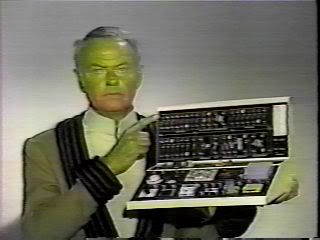
I've always adored Harvey Lembeck in this role, but thre was always Mother, Juggs, and Speed.

Chukotka Autonomous Okrug


Chukotka Autonomous Okrug (Russian: Чуко́тский автоно́мный о́круг, tr.: Chukotsky avtonomny okrug; Chukchi: Чукоткакэн автономныкэн округ), or Chukotka (Чуко́тка), is a federal subject of Russia (an autonomous okrug) located in the Far Eastern Federal District. It is the farthest northeast region of Russia, and since the sale of Alaska to the United States is the only region of Russia lying partially in the western geographical hemisphere. It is washed by the Bering Sea and the East Siberian Sea. Chukotka has an area of 737,700 km² and population of 53,824 (according to 2002 Census), and just over 55,000 in 2004. The principal town and administrative center is Anadyr.

Chukotka was formerly an autonomous okrug subsumed within Magadan Oblast, but it declared its separation in 1991; a move that was confirmed by the Russian Constitutional Court in 1993.

Elgygytgyn Lake, an important site for scientific research on climate change, is located in Chukotka.

Traditionally the home of the native Chukchi people, Siberian Yupiks, Koryaks, Chuvans, Evens/Lamuts, Yukagirs, and Russian Old Settlers, the region was subject to collectivisation and forced settlement during the Soviet era.

Chukotka has large reserves of oil, natural gas, coal, gold, and tungsten, which are slowly being exploited, but much of the rural population exists on subsistence reindeer herding, hunting, and fishing. The urban population is employed in mining, administration, construction, cultural work, education, medicine, and other occupations.

Chuck E. Sellier, Creator, Bulk of the Series, Not Exactly A Lightweight


Check out this awesome tribute site to Grizzly Adams.

http://www.grizzlyadams.net/

Wednesday, April 25, 2007

The Cows


I like these guys from Minneapolis...wish You Tube had some clips of The Cows playing "El Shiksa". One of my favorites.

Tuesday, April 24, 2007

Transcend all illusions of time and space by using your imagination, which can take you anywhere at any time

Poison Arrow


This ABC song came to mind this morning. The Greek tragedy set to 80's synthesizers. Once again, art imitates my life minus all the percussionists (gentleman, is it necessary to have mammoth orchestra bass drums and assorted congas for a song that employs a single Casio SK-1 drum machine?) Anyway, the quick flash of the Coke advertisement at the end is good for sponsorship. Poison and Coke? A winning, refreshing combination!

Thursday, April 19, 2007

Time is Bleeding

In 2006, I wrote a preface for Denis Emorine's book, Au chevets des mots (A Step Inside). I remember reading this little book and becoming quite delighted with it...it spurned my desire to quest for that which is unsaid or cannot be said...that is, the pauses between "words" that say EVERYTHING. (Kalinauskaite, previous entry)

It was liberating to lose myself in this wistful reverie.

Preface: Here is a collection of vignettes that invites the dreamer into the elusive, entrancing perpetual fever of poetry. Here you are in the town square of language, where words elope, make love, fight, and part like unsatisfied, restless lovers into the night. It is never enough, it seems, when it comes to language. There are words that masquerade and manipulate, and there is the purity of meaning, as Emorine seems to suggest from the opening quotation used:

"And then, we'll be able to talk without stumbling into those words that cause time to bleed." --Jo Bousquet.

...The heart of this collection is in the segment "Fever", when Emorine declares: "Only silence has the bedside manner needed to respond to words broken down by their plentitude."


-Lina ramona Vitkauskas

ISBN: 2-919942-15-8

Tuesday, April 17, 2007

Arizona


Carefree, AZ. Cave Creek, AZ. Sedona, AZ. Pure vortexes of energy in those stoic, wise rocks that have stood the test of time on the barren landscape. The vegetation--saguaro cacti, ocatillo, pricky pear. Javelinas cross the roadways. Cowpokes and Harley riders. The stretches of long desert miles. The constellation-filled sky--seeing Venus as bright as the sun.

Thursday, April 05, 2007

Pulpo

“Ace Of Wands
Scissors in a cross
An invisible heart
is distressed, see it?
A heart reflected on the wind.”

—“Incantation”, Poem of the Deep Song, Gabriel Garcia Lorca


The still wave,
pulpo of ice, storm reef,
stolen elephante forms
an apprehensive crash.

Emily said, “A word that
breathes distinctly
has not the power to die.”
The ether of each ovary ember,

lost in the wine of night.
I could juxtapose jurors, virgins
and my twisted tongue

and remain a lamp
that witnessed the stabbing:

"Como tembalaba el farolito de la calle!"

Invisible Hairshirt

Lyrics to 20+ year-old songs like Alison Moyet's "Invisible" (which stopped by the brain this morning) has redressed the idea that the subconscious does have a soundtrack and puts the needle to the proverbial life vinyl when an appropriate "groove" arises.

My whole life, I've seen the world symbolically, through letters/characters, language/words, sounds/sights. It is amazing to me, when I observe waves that crash against rock, that I can process it to the point of feeling, for a moment, as if I am a wave. My reception to nature could further be tuned, but the frequency has at least registered.

Between Moyet, REM, and the torrential and seemingly chilling waves this morning, I recall a conversation last night with a few writers about music's role or importance in finding a voice in writing. The poetic is fictional and fiction is poetic and reality is only word in the language that should always be used in quotes.

-----------------------------------------------------

"So here I am. Here I am."

I am not the type of dog
That could keep you waiting
For no good reason
Run a carbon-black test on my jaw
And you will find it's all been said before

I can swing my megaphone and long arm the rest
It's easier and better
To dispute it from the chest
Of desire

I could walk into this room
And the waves of conversation are enough
To knock you down in the undertow
So alone, so alone in my life
Feed me banks of light
And hang your hairshirt on the lowest rung
It's a beautiful life
And I can hang my hairshirt
Away up high in the attic of the wrong dog's life chest
Or bury it at sea
All my life I've searched for this

Here I am, here I am in your life
It's a beautiful life
My life
It's a beautiful life
Your life

Tuesday, April 03, 2007

Le Notti Bianche (1957), Visconti


Le notti bianche (White Nights), directed by Italian neorealist Luchino Visconti, takes its title and basic plot from Fyodor Dostoevsky’s 1848 short story. In both the story and the film, a lonely young man meets a lonely young woman.

Mario (Marcello Mastroianni) is lonely for social reasons; he is a stranger and a newcomer to town. Natalia (Maria Schell) is lonely because she has always lived in isolation, even in the heart of the city. Her loneliness is intensified because she is in love with a man (Jean Marais) who may not ever return to her, but who continues to occupy her heart to the exclusion of any other possible relationship.

Mario thanks the young woman for the moment of happiness she has brought him. However, he is left alone at the end of the film, befriending the same stray dog he met at the beginning. He is back at square one, and has put more energy into pursuing the fantasy of an obsession rather than any prospect of real love.

Tuesday, March 20, 2007

DHAMMPADA (adapted)

"Love yourself and be awake--
today, tomorrow, and always.

First establish yourself in the way,
then teach others,
and so defeat sorrow.

To straighten the crooked
you must first do the harder thing--
straighten yourself.

You are your only master,
who else?
Subdue yourself, and discover your master."

Friday, March 16, 2007

Kiss Off


"I hope you know
that this will go down
on your permanent record
Oh yeah?
Well dont get so distressed.
Did I happen to mention that I'm impressed?"

Last night, I saw a great friend of mine play in his band, The Telepaths. The show was a breast cancer cure fundraiser, and, having nearly missed early detection four years ago (yes, I almost even missed finding the inkling of possible cancer had it not been for my intuition and insistence), I believe any type of awareness is positively vital, no matter how small a gathering. Everything counts in large amounts, the boys from Essex said.

The Telepaths are comprised of my buddy PMcD; a blast from my high school past who used to call everyone "a piece of shit"; Cory from the popular group The Cells (for last night); and genius James (White Wolf), the other half to my previous workmate, Carla (Sonic Princess). The Telepaths did a raw version of "Cover Me" (Springsteen), a kickin' cover of "Dirty Work" (Steely Dan) and a dirrrty version of "Area 51" (with Hoopa Freaks)! I much enjoyed the soulful, searching ballad for "Susan Sontag".

This all got me thinking about live band karaoke and what song I'd do. This one (Kiss Off-Femmes) is angry, and I'm not angry, but I imagine I could twist my pipes around it and really get salty on stage.

Wednesday, March 14, 2007

Ring Tones

I don't give a shit about your ring tone. They have become the new "life flair". They are so Spencer Gifts. If you feel the need to define yourself by a noise, then fart. It would be far more profound.

Monday, March 12, 2007

Elevation

My encounters in the elevator in my building have spurned the idea that universal consciousness has never been so relevant as it is in this day and age. As I age and observe people observing me, I still do not realize that my perception of myself is expertly cloaked beneath the veil of a world-weary woman. (This is the air I give off though I have no clue from where it hails). I recall an cluster of Indian women one evening, all elegantly ornamented in beautiful silken saris, glowing from a wedding celebration, laughing and sharing with me their joy.

There is a projection of yourself in your immediate space that you ooze, and human beings read these signals; the urge for human connection is evident more than ever before--even in a friendly city like Chicago where it is quite plausible for an immigrant of any nationality to come up to you on the street and tell you his or her life story.

But in the elevator, there is something about a chance encounter, a meeting with someone alone in an enclosed space for a brief moment in time, under harsh flourescent lights that evokes a spirit of interrogation and confession. I also attribute my reception of these encounters to the expressive nature of my face and spirit. I seem to invite storytellers to me. I should have been an investigative journalist or a psychologist.

My first encounter: a South African gentleman who kindly shared with me his short story of being in this country thus far. It was a recounting of how he was now somehow responsible for several payments for magazine subscriptions. I am sure he was coerced into them by slick advertisers (the likes of whom I know all too well). He was kind and extended his hand. I shook it and felt an awakening of my spirit then, how else to describe seeing a flash in my mind of long travels and distant lands, vegetation, wildlife I have only seen in photos. He had come so far and was proud to be here. He had warmth to give a small blonde girl in the elevator. There was an assurance that whatever trouble I had been grappling with in my mind at that moment, that it was insignificant in the grand scheme of life.

The second was with a small man of Serbian or Russian decent--it was difficult to localize his accent in a short span of time. He studied my face with such intensity I thought he might grab my face between his small, rough palms and devour me. After a moment, a voiced question with a soft caress to his own cheek, asking, "Of where I come from." I told him I was Lithuanian. He nodded and left the elevator.

The next was with a man who opened a dialogue after I sighed painfully while waiting for the next car to arrive. "You look like you've been rode hard and put up wet." I remarked that was weird to say. He countered with, "Well, I'm a cowboy." I asked, "Oh yeah? Where are you from?" He answered, "I'm from the East coast originally, but I'm a Michigan cowboy." I said, "There's no cowboys in Michigan." I began to study the numbers on the elevator. He got off at 16 telling me, "Yeah, I'm the disappointment to the family. I left home, went off to Vietnam and fought, and then went to school." I sarcastically commented, as the doors closed between us, "Yeah, that's pretty disappointing."

Caught


Giant squid, the most giant squid, wrapped in cold salt of man's man's nets
I ate all the tentacles last night

Pervading Theme


by Cristian Vargas, Bogota, Colombia

Li Nan, Poet

"only those who do love
are far from love"

-Li Nan

LI NAN'S BOOK, SMALL AVAILABLE AT VISUAL ARTIST'S COLLECTIVE

Tuesday, March 06, 2007

Pauses

RASA KALINAUSKAITE, a journalist from Vilnius:

"...when I construct voices by myself, a montage is done, performed by you - you cut out pauses. If we consider voice as a construct of modern epoch, that is the voice without pauses. These days, people avoid pauses, they fear pauses. Because voice without pauses is information...and the more information, the more it is valuable. Although I think that the voice principally resists such castration, as perhaps the most valuable elements are sighs, natural inhalations, exhalations, some kind of bodily physiology, everything what is inclusive in pauses...You just observe it how physical bits of voice...are cut out...the voice is no longer there…"

I have translated one of Kalinauskaite's poems, Coversations with Teo. I take great care in the pauses when reading.

"Wife to Doug"

"She loves the satisfaction of unearthing a treasure among the long rejected."

Friday, March 02, 2007

Apoplectic Butterfly / Fin de siècle

winged and warping,
current event raws her;
a vegetation still life,
garage slipcover, combustion dance,
this random cluster of cork
typical of the Aesthetic movements
fleshtones, flavors. agricola
and villa collide to make agrilla,
an Edwardian viceroy illustration
each line a place to burn
the census, thorax
threaded against time.

Published in Fifth Wednesday

Thursday, February 22, 2007

Neologisms

A friend sent these and I took great delight in them:

1. Coffee (n.), the person upon whom one coughs.

2. Flabbergasted (adj.), appalled over how much weight you have gained.

3. Abdicate (v.), to give up all hope of ever having a flat stomach.

4. Esplanade (v.), to attempt an explanation while drunk.

5. Willy-nilly (adj.), impotent.

6. Negligent (adj.), describes a condition in which you absentmindedly answer the door in your nightgown.

7. Lymph (v.), to walk with a lisp.

8. Gargoyle (n.), olive-flavored mouthwash.

9. Flatulence (n.) emergency vehicle that picks you up after you are run over by a steamroller.

10. Balderdash (n.), a rapidly receding hairline.

11. Testicle (n.), a humorous question on an exam.

12. Rectitude (n.), the formal, dignified bearing adopted by proctologists.

13. Pokemon (n), a Rastafarian proctologist.

14. Oyster (n.), a person who sprinkles his conversation with Yiddishisms.

15. Frisbeetarianism (n.), (back by popular demand): The belief that, when you die, your Soul flies up onto the roof and gets stuck there.

The Cinema

I absolutely love film. I still have a Korvette's 8mm left behind from my grandfather when he first came to this country from Lithuania. It sits in a box in my closet, begging me to free it and roam about with it in an inspired trance.

I was thinking about the shame of the Oscars, how it, like everything else, has become tarnished by commercialism and banality.

That is not to say that some of the films/actors up for consideration this year are not worthy of praise. To give an Oscar, however, is pretty meaningless anymore. I am sure most agree that this once most prestigious honor has really been soiled by the fact that trustees or bankers or someone other than one who truly understands, supports, and/or is involved with the art is choosing "a winner". In fact, there are so many wonderful movies, the idea of only honoring one as "the best" of the year falls suit with anything Americanized (number one, first place, competition, etc.)

I'd like to see a show that honors all the great films that were released in a single year, showcased via a sleek montage as they do for fallen actors/ directors/ filmmakers/ designers.

Some of the films that I saw this past year (2006) (not necessarily from this year, and some are older films) that I found notable:

1. The Science Of Sleep
2. Zizek
3. My Life As A Dog
4. Breakfast On Pluto
5. Fando y Lis
6. Grey Gardens (finally per request of CS and CC)
7. The Lost City
8. Junebug
9. The Man Who Laughs
10. Everything Is Illuminated
11. The Phantom Of Liberty
12. Veronika Voss
13. The Squid And The Whale
14. El Topo
15. David Lynch's Short Films
16. Goodbye Lenin
17. Children of Men

Saturday, February 17, 2007

Tango y Cash?

Listening to: Gotan Project, Epoca, La Revancha del Tango


I call this BLUE STEEL.

"El Topo": A Synopsis Thus Far

Midnight movie at The Music Box:
The movie takes place in two parts. The first half, in an unnamed desert, begins with the title character, accompanied by his naked son, hunting down and killing a band of outlaws who have butchered the inhabitants of a town. After leaving his son with monks he has rescued from the outlaws, he rides off with a woman the outlaws had kept captive to defeat the four great masters of pistol duelling. As El Topo encounters each of the first three masters, the master teaches El Topo a lesson and they then duel, in which El Topo cheats every time. The final master kills himself, in a demonstration of the unimportance of life. The first half ends with El Topo's betrayal and near-murder by the woman and an unnamed informant.

The second half of the movie takes place years later, after El Topo is rescued by a band of deformed outcasts, saving him from death. The outcasts take El Topo to their underground community, where he, comatose, meditates on the four lessons for many years. When he awakes, he is 'born again' with the help of the outcasts, and goes on a quest to free them from their subterranean prison.

With the help of his dwarf girlfriend and his full-grown son, now a priest, El Topo digs an exit out of the cave, only to see the others of his community murdered by cultists from a nearby town. In a rage, El Topo kills them all, then pours oil on himself and sets himself on fire, as he has learned all he can about life.

El Topo's son and girlfriend survive the ordeal and make a grave for his remains, which becomes a beehive full of honey.

Thursday, February 15, 2007

Mercury: I Have A Love-Hate Relationship With That Metal

"The people desire their ways to be
looked into but won't come up
with any names."

—William Fuller, "The Same" from Watchword

molecules said this:
a distinct place:
a ruling planet.
Mutability.

Sunday, February 11, 2007

Lithuanian Independence Day Commoration, Feb. 16

Today I went to Maria High School in the old neighborhood, Marquette Park. I saw three speakers and Senator Dick Durbin speak about Lithuanian Independence.


David Satter
Former Moscow correspondent, is a long time observer of Russia and the former Soviet Union. He is a senior fellow at the Hudson Institute, a research fellow at the Hoover Institution and a visiting scholar at the Johns Hopkins University School of Advanced International Studies (SAIS).

Satter was born in Chicago in 1947 and graduated from the University of Chicago and Oxford University, where he was a Rhodes Scholar and earned a B.Litt degree in political philosophy. He worked for four years as a police reporter for the Chicago Tribune and, in 1976, he was named Moscow correspondent of the London Financial Times. He worked in Moscow for six years during which time he sought out Soviet citizens with the intention of preserving their accounts of the nature of Soviet society for posterity.

After completing his term in Moscow, Satter became a special correspondent on Soviet affairs for The Wall Street Journal, contributing to the paper’s editorial page. In 1990, he was named a Thornton Hooper fellow at the Foreign Policy Research Institute in Philadelphia and then a senior fellow at the Institute.

Satter has written two books about Russia, Age of Delirium: the Decline and Fall of the Soviet Union (Knopf, 1996; paperback, Yale) and Darkness at Dawn: the Rise of the Russian Criminal State (Yale, 2003). His books have been translated into Russian, Estonian, Latvian, Portugese, and Vietnamese. Age of Delirium is also being made into a documentary film by the Russian director, Andrei Nekrasov, in a U.S.-German- Ukrainian joint production. The film is to appear on the 15th anniversary of the fall of the Soviet Union. He is presently working on a new book about the Russian attitude toward the communist past.

Publications and Media Exposure

Satter has written extensively for the editorial page of The Wall Street Journal. His articles and op-ed pieces have also appeared in the Los Angeles Times, The National Interest, National Review, National Review Online, The New Republic, The New York Sun, The New York Review of Books, Reader’s Digest and the Washington Times. He is frequently interviewed in both Russian and English by Radio Liberty, the Voice of America and the BBC and has appeared on Fox News, C-Span, the Charlie Rose Show and other television programs.

Who Killed Alexander Litvinenko? 11/28/2006


Dr. Darius Furmonavicius
MA in International Relations (University of Nottingham, 1996), PhD in European Studies (University of Bradford, 2002), was awarded a 2002 Bernadette E. Schmidt grant for research in European history of the American Historical Association to complete his research for a monograph ‘Lithuania Rejoins Europe’ (forthcoming by the East European Monographs Series of the Columbia University Press in 2006) as a Postdoctoral Researcher in the Department of Languages and European Studies, University of Bradford. His main research interests are the international relations of the Baltic States, international aspects of Lithuania’s politics, history, and economy, European security (particularly of the Baltic Sea region), NATO & EU enlargements, and European-American relations. He is also Acting Chairman of the Lithuanian Research & Studies Fund, 16 Hound Rd., West Bridgford, Nottingham NG2 6AH, UK.

Andrei Nekrasov, Russian filmmaker
  • Andrei Nekrasov
  • Wednesday, February 07, 2007

    Re-Fall

    Someone dragged out "trip" and "fall". What happens if you do not utilize this correct sequence, that is, if one should fall and then trip?

    Tuesday, February 06, 2007

    The Real Nature

    A tiny fox attacks
    in the bath and dreams
    of grapes of the mind,
    salvages Western gear.

    He is living, after all,
    in clouded kisses of bloody.
    Novel forest, nomad, barnacle,
    he is writing a word for you.
    Generous strobe,
    you bring happiness.

    Monday, January 29, 2007

    The Path of Mindfulness

    "A practitioner is aware 'this is suffering', as it arises. One is aware 'this is the cause of the suffering', as it arises. One is aware, 'this is the end of suffering' as it arises. One is aware, 'this is the path which leads to the end of suffering' as it arises."

    --adapted from Satipatthana-sutta, translated by Thich Nhat Hanh and Annabek Laity

    Friday, January 26, 2007

    Interview U

    JAN 25 23:02

    Today is Friday, Jan. 26th and it is 1:30 pm and I am staring out the window and in broad daylight I can already see the moon out in First Quarter position that will last until Full Moon Feb 2 05:45. I am feeling as hidden as this moon.

    Thursday, January 25, 2007

    The Flaming "V"

    a. Reefs
    "Well, I'll swill seahorse's eyelash,"
    Ravi declared. "I do believe I'll
    masticate the alphabet twice."
    She via Venus, thirsty heart
    a serrano along the roadside.
    Through the verbal ambergris,
    desire laminates this puncture.

    b. Branches
    "Muse droppings,"
    details Mavis. "A whole
    bouquet." And the needles.
    Thread glass stylus,
    play love's archeology
    of reunion. "Signed,
    Okiagari-koboshi*."

    c. Mannequin Fingers
    She beneath aperture
    coves draped in
    phosphorus feathers,
    spark plugs.

    *Okiagari-koboshi, "the getting-up little priest" is a traditional Japanese doll. The toy is made from papier-mâché and is designed so that its weight causes it to return to an upright position if it is knocked over. Okiagari-koboshi is considered a good-luck charm and a symbol of perseverance and resilience.

    Wednesday, January 24, 2007

    Nombre del Arbol/Medis Vardas

    sus manos
    son mis manos
    en la vida del arboles;
    las manzanas
    de mis ojos
    son tuyos
    *Spanish

    savo rankas
    yra mano rankas
    gyventi medai
    yra akies obuolys
    *Lithuanian

    Monday, January 22, 2007

    Jupiter Uranus Square

    These rabid braille details.
    Reciprocation,
    the icebox swears,
    it is new language.

    Lovers: when Jupiter,
    in 12 years, contemplated
    you--now, on January 22.
    Make hands, make a significant
    era. Uranus, 'the Awakener' hits
    cosmic you.

    You. Most significant braille.
    Rabid reciprocations in
    the language icebox.

    Thursday, January 18, 2007

    Aviary

    Radio wire is often used to make bird nests.
    What station do they listen to?

    WREN

    Wednesday, January 17, 2007

    17

    post of olive marrow,
    winter lasso, arrived
    each a mother,
    a matron, & mistress
    under the universe's
    cruel microscope.
    each mind letters
    a scientist and then,
    17 of them: "I am a
    whisper." And then,
    all that cuts thirst,
    all in her walk to
    the still lake, all
    in each crimson gush
    the maid cries into her keys.
    "It must be." For pistachio
    myth, this extinct exchange,
    no cuneiform across men's
    mysteries, chests,
    aches, can cross.
    _____________________________________________

    The Brodmann area defining the primary visual processing area of mammallian brains, the atomic number of chlorine, the number which held the key to the control of natural forces in Godley & Creme's Consequences, the halogen group in the periodic table, Messier object M17, a magnitude 7.0 nebula/cluster in the constellation Sagittarius, also known as the Omega Nebula, The Number Seventeen (1932), directed by Alfred Hitchcock, 'the most random number' as described by MIT, The New General Catalogue object NGC 17, a peculiar galaxy in the constellation Cetus, the age at which one may donate blood and join the military voluntarily, in the novel So Long, and Thanks for All the Fish by Douglas Adams, a character who is unknowingly a rain god has a numerical scheme to categorize all the different types of rain which continuously bombard him; the worst, the heaviest, the least pleasant, is Rain Type 17, "a dirty blatter blattering against the windows so hard, it was impossible to tell whether he had the wipers on or off", the ratio 18/17 was a popular approximation for the equal tempered semitone during the Renaissance, the age of the "Dancing Queen", a mild swear word in Swedish, commonly used as "sjutton också!" ("seventeen, too!"), roughly be translated to "Darn!", the maximum number of strokes of a Chinese radical, the number of syllables in a haiku (5+7+5), in Nordic countries the seventeenth day of the year is considered the heart and/or the back of winter, the number of trees Dostoevsky could see out of the window of his cell while he was in prison, the number of surat al-Isra in the Qur'an, in Italian culture, the number 17 is considered unlucky. When viewed as the Roman numeral, XVII, it is then changed anagramtically to VIXI, which in the Latin language it translates to "I have lived", the perfect tense implying "My life is over." (c.f. "Vixerunt", Cicero's famous announcement of an execution.) The Italian airline carrier, Alitalia, does not have a seat 17.

    Thursday, January 11, 2007

    Matriculate Blind

    these ravens wore wool,
    rushed to the story
    of two stripped
    planetary streams

    fell she
    fell
    the eyes her
    fell

    wings clipped.

    Monday, January 08, 2007

    Fins of Cloves

    In my Sanskrit state,
    my still celluloid dream,
    the last gelatine poems
    severed from scrolls and minerals.

    I'm the demographic gaffe,
    protest me. This fission of girl,
    this scaling. I, beheaded,
    a loving cup smirk.
    My life a mussel- a soft gun,
    a parliament of flora,
    my name.

    Sunday, January 07, 2007

    Finch Me A Vacuum


    Artist Céleste Boursier-Mougenot.


    Saw his installation, From Hear to Ear seven years ago at the
  • Cincinnati Contemporary Arts Center.


  • He recently had an exhibit in NY (below) of vaccuum cleaners producing sound via strategically-placed harmonicas. In the backdrop of this exhibit, he a magnified a candle flame and kept the camera steady upon it. He then recorded the flame's sound vibrations as it flickered. When this sound was played back to the candle, it extinguished itself.

    There is something about sound within an art installation. Sound obviously sets tone and environment. However, from a potentially-blind perspective, I have grown to become attuned to sound. Each nuance sound in daily life: of pitch, tone, variation, pauses, breaths, and white noise all indicate place, time, and mood. I can sense tension and love through sound. I can feel vibrations in the air. I can taste electrical impulses. When we viewed the exhbit of finches on a labyrinth of wire hangers, there was a chorus of their movements in the air. Sound implies existence. In the large, cold room, one could close their eyes and feel each finch move with a winged flutter and tinge of wire clinging in the air. It was as if you were a tiny finch in this created environment, for a moment.


    harmonichaos


    Photograph courtesy Paula Cooper Gallery, Paula Cooper Gallery, through Oct 14 2006
    From Time Out New York

    “French artist Céleste Boursier-Mougenot has casually arranged 13 vacuum cleaners, hoses curled and metal tubes standing at attention. Their indicator lights glow green and each has a harmonica stuck in its nozzle. One vacuum suddenly switches on, a wan yellow bulb attached to its side lights up, and air is sucked through the harmonica, sounding a wheezy chord. As it turns off, another goes on, its harmonica playing at a slightly different pitch. Soon all the machines chime in at intervals, creating the chaotic harmonies suggested by the work’s title, harmonichaos.

    Boursier-Mougenot allows chance to conduct his concert: The vacuums’ motors are controlled by hidden sensors (modified electric guitar tuners) that react to sound frequencies, producing live, never identical call-and-response performances. Together with the muffled whirring of the motors and ambient noises in the gallery, the harmonicas evoke incidental pipe organ music, as if John Cage had scored a Lon Chaney film. In its spectacle of technology forming a disembodied choir, harmonichaos also recalls the eerie melancholy of Janet Cardiff’s Forty-Part Motet (installed at P.S.1 and, more recently, MoMA).

    Opposite the vacuums is a black-and-white video projection of a candle flame, enlarged to the point of abstraction and flickering in slow motion. Its movement, we learn from a gallery handout, was generated by the reverberations of its own light. The fluttering was translated into sound waves, which were played back on a speaker; the sonic vibrations blew the flame out. But the video is silent and our connection to this process remains as ephemeral as the ghostly image itself.”

    Wednesday, January 03, 2007

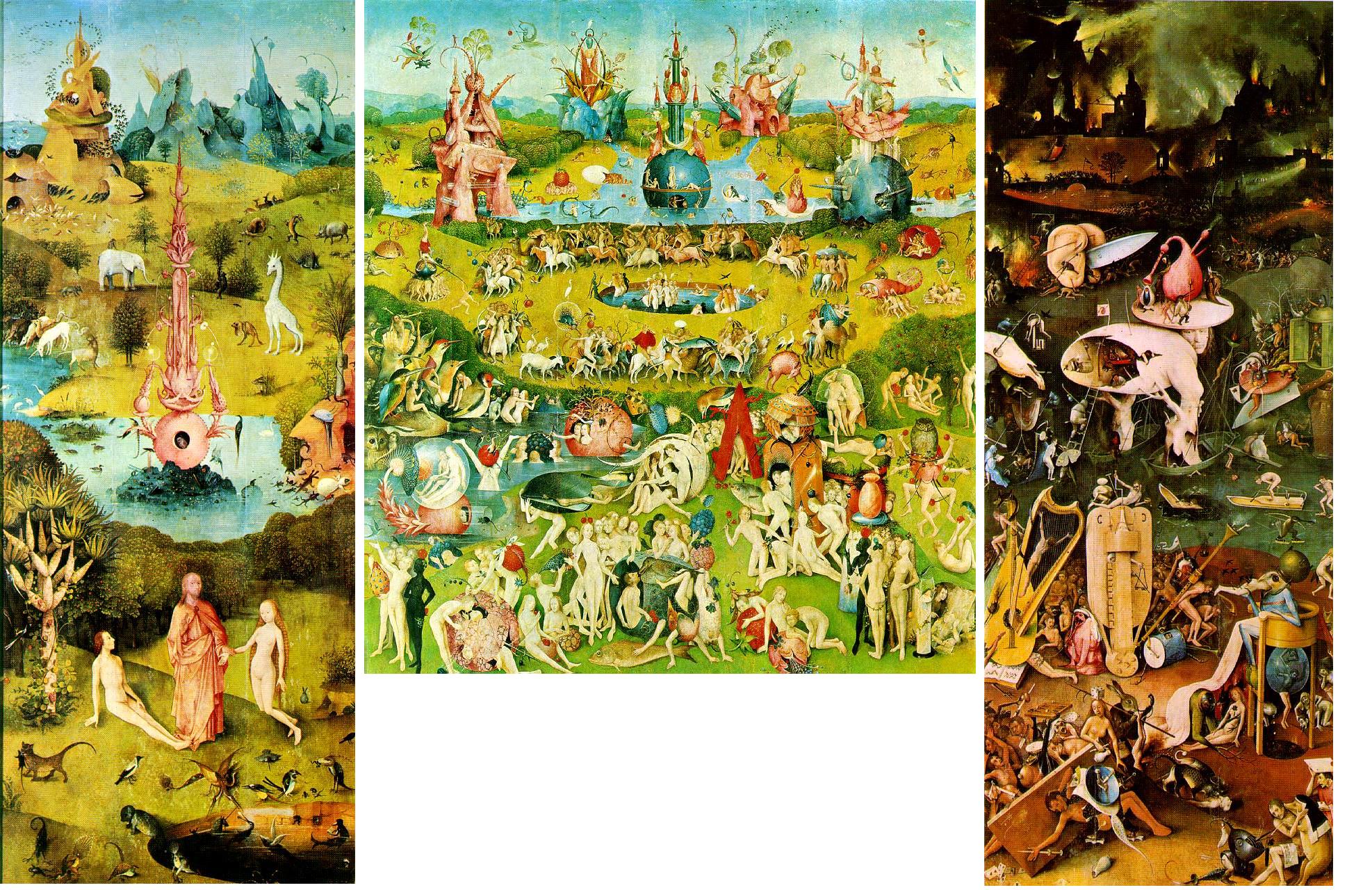
    Hieronymous Bosch


    The fish of man/
    opal-dyed quasars/
    yet to be molested or birthed/


    We come back to where we have committed a crime,
    [not] to where we loved.

    -Joseph Brodsky

    "Min-roe!"

    Tuesday, January 02, 2007

    Ultraviolet


    THE RATE OF OSCILLATION
    NEVER BEGS FOR INTERFERENCE

    "Our Destiny is to Merge with Infinity"

    ...said the teabag tag.

    New year thrusts forth the notion that we will receive a clean slate handed to us at the stroke of midnight. Though this mentally transpires due to intoxication, it is us who must shift perspective to this new state of mind independent of chronology.

    It is this illusion that change only exists when we exert our will upon the universe, but it is the universe, ultimately, that is in constant flux and affects all life forms as a result. Impermanence, change, is necessary and an innate foundation of life. It is "okay" for things to change. We are not in a stoic state. Time is passing, we decompose. However, life is simultaneous, keeping rhythm with this and these accidents, coincidences, and "planned" occurences are all relative. Is it according to plan? What is the plan? Does one need "a plan" and why?

    Is this a cruel, sick joke in which fleeting, meaningful moments ensnare entire being only to be interrupted by mundane being or is it in pure being that meaning is found? Perhaps there is no meaning in pure being, our hearts mechanistically pumping, each of us dead until the next significant moment pulls us from tragedy to elation?